
What if I’m not as resilient as I used to be?
What supports resilience when your work starts to matter more?

It’s a quiet question, but a heavy one.
One that tends to arrive not with drama, but with subtle signals—fatigue that lingers, recovery that takes longer, motivation that flickers instead of flows.
We often jump to the same conclusion. I must be losing resilience.
But I’m no longer convinced it’s true.
What if resilience is within our power to correct once we understand how it works and are able to master it.
It’s not weakness. It’s biology, identity, and honesty colliding.
What if resilience doesn’t disappear, but just needs the right support to function? The thought crystallised for me as I watched aging role models continue to perform at the highest level.
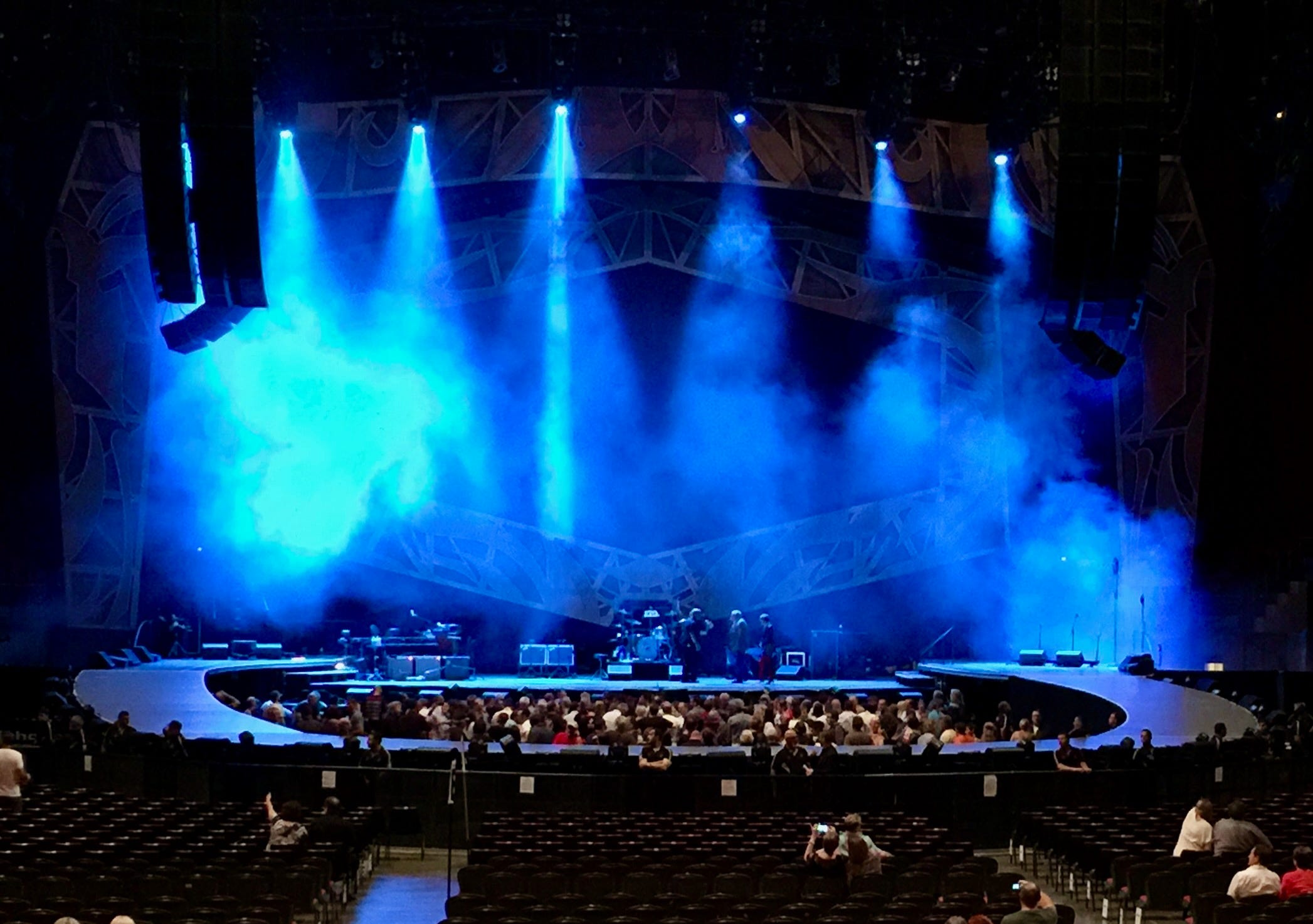
I watched Mick Jagger, still commanding stadiums in his eighties with physical intensity most people half his age couldn’t sustain.
I watched Stevie Nicks still touring at 77, doing what she has always done—expressing herself through music with presence, power, and emotional resonance.
It’s tempting to dismiss examples like these.
Mick has trained forever.
Stevie is just doing what she’s always done.
They’re outliers.
But that explanation is too shallow. What struck me wasn’t just their longevity. It was their continuity of expression. They’re not just staying alive longer. They remain themselves doing what they’ve always done to the same very high standard.
What are they doing that underpins their performances?
They’ve built lives that support longevity of expression.
And that raised an uncomfortable but essential question for me:
If resilience is still there… what’s it made of?
Watching Mick and Stevie didn’t inspire comparison. It prompted reflection.
An article in Men’s Health detailing Mick Jagger’s training made something click for me. What stood out wasn’t how hard he trains. It was how precisely his support system is designed for the way he needs to perform.
This prompted deeper thinking.
Before starting my publishing journey, fitness was my life. I was doing serious Peloton rides with an ex-Tour de France rider-turned-Peloton instructor, Christian Vande Velde. In my late 60s, I could do challenging cardio and strength work, recover and do it all again tomorrow.
However, over the past year, I added an Amazon publishing business and a rekindled Substack, Aging with Attitude, to my days. It has been intellectually stimulating, deeply purposeful, but enormously demanding.
I didn’t stop exercising. I didn’t abandon my routines.
My fitness streaks stayed intact. But something shifted.
The intensity of my training dropped.
My recovery slowed. My HRV (Heart Rate Variability) declined.
On paper, I was still “doing the right things.” In my body, I felt the difference.
And that’s when it landed for me: fitness alone may not guarantee resilience. I had assumed it would carry me through. As long as I kept moving, resilience would take care of itself.
This is where the conversation about resilience often goes awry, especially as we age. We talk about resilience as if it’s a personal trait you either have or lose. As if it’s something you should be able to push through.
But resilience is not just willpower.
It’s not just fitness.
And it’s certainly not pretending that nothing has changed.
Resilience isn’t a single behaviour.
What if it’s a specifically tailored system that supports our unique life expression, whatever that may be? And my life expression had changed. I wasn’t just spending my time on fitness challenges. I had added another very purposeful project to my days.
The demands of creative work, decision-making, learning new platforms, managing uncertainty, and holding long-term vision all competed for the same finite resources I had been using to ride like the wind and lift heavy weights.
Energy. Attention. Recovery capacity.
My mistake wasn’t commitment. It was assuming one pillar, fitness, could compensate for everything else.
So I began asking different questions.
Not “Why am I less resilient?”
But “What does my new version of myself need to support it?”
To begin with, this new life expression of writing and publishing carries a higher cognitive load than I have been accustomed to for a few years.
Thanks to Mick Jagger, it became clear to me that the best support systems are unique and intentionally created.
What will now support me being purposeful?
What will support me in producing valuable outcomes for readers?
What will support me staying mentally sharp, physically capable, and emotionally steady?
Which brings me to where this reflection has landed.
Maybe resilience isn’t about pushing harder, which has been my personal go-to strategy for decades. Perhaps the support system needs to change as new projects and purposes emerge.
And acknowledging that isn’t about decline. It’s smart.
This week, I wanted to open the conversation.
To name the quiet fear many of us carry.
To challenge the assumption that resilience is disappearing.
And to suggest a different frame:
Maybe resilience isn’t gone.
Perhaps it’s waiting for the specific support system for your unique life expression.
Next week, I’ll go deeper.
I’ll unpack how I’m deliberately designing my personal support system—the physical, cognitive, and restorative elements that allow my capabilities to keep expressing themselves as my life evolves.
Because aging well isn’t about clinging to old formulas.
It’s about designing and redesigning the system so the best of you can always be expressed.
And that, to me, is real resilience.
Hi Robyn, there are so many essential points in your article, I don't know where to begin. For one, like you, I've learned that aging well is more than physical health; I now see it as a balance between that and quality of life, or well-being. For another, along the lines of changing projects, I also signed up with Amazon Publishing a couple of weeks ago. My goal is to compile some of the articles I've written over the past five years into a book. Question for you: Do you think of resilience as a choice?