

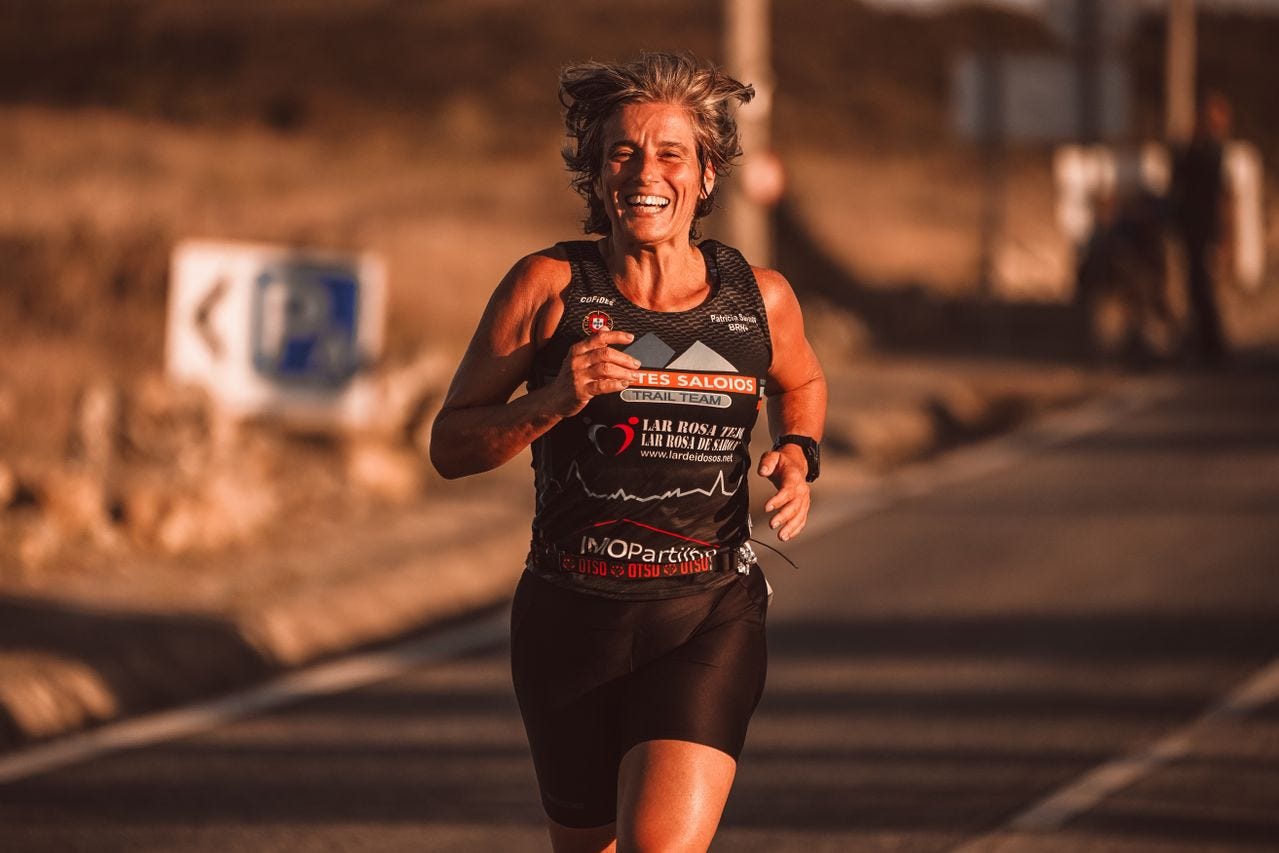
Welcome to Age with Attitude, where I have upgraded that one question to:
What’s possible as we age?
Since I started writing about adaptation recently, I have had to take a fresh look at my approach to life, aging and writing.
Looking back over my most recent 50 essays, I sensed a comfortable conservatism. I’ve beavered away in my quiet beachside home office, writing perfectly reasonable, reflective essays about life by the beach, family and the gradual shifts we make to accommodate our changing bodies. I was learning to pay attention to my world, put pen to paper and find my writing rhythm. It was a safe, protective routine.
I am happy with those essays and the conversations they sparked, but they were polite, measured and pleasant.
I realized I may have fallen into a seductive trap. Society often invites us to look at aging as a defensive game of risk mitigation—a search for a predictable groove where the friction of the world can’t touch us anymore. It wraps us in a comfort zone of lower expectations, telling us we’re doing enough.
Staring at those pages, I caught myself playing the same defensive game. I was writing from the sidelines, gently interpreting decline instead of actively challenging it.
When we treat adaptation as a way to quietly adjust our lives around limitations, we sign our own permission slips to shrink. You feel a twinge, so you walk a little less. Your balance slips, so you avoid stairs. You stop fixing the capacity and start managing the retreat.
This quiet denial is the ultimate architect of a shrinking life. It tells us that difficult technology, challenging physical mastery, intense creative production, or radical lifestyle independence belong exclusively to the young. We convince ourselves we are ‘adapting to our life cycles’, but the truth is far more alarming: we are letting inertia take hold. We are trading our agency for safety, turning the second half of our lives into a comfortable waiting room.
True adaptation was never meant to be a defensive strategy to survive our decline.
True adaptation is an offensive weapon to expand our capacity.
To me, there’s no one better at ‘offensive’ than Tadej Pogacar riding the Tour de France, which wrapped up yesterday. Once again, he is redefining what’s possible at the highest level in the highest mountains. Every year he inspires me and millions of others to challenge themselves in some small way.
Now I am not young. I am not an elite athlete, but I am a cyclist.
I love to re-read my post on Chasing an 80-year-old through the Montana Mountains and feel the buzz.
I think about the 80-something woman cycling completely alone through the rugged terrain of Croatia and Morocco, taking discomfort in her stride.
I look at the stunning accomplishments of cyclists inside the Peloton over-60 Facebook community right now—people in their seventies, eighties and even nineties shattering performance boundaries I never dreamt possible.
I honor 91-year-old Dottie Dorion for successfully campaigning to make Peloton create leaderboard age categories way past sixty. When you have 2,900 Peloton rides and 250 marathons, triathlons and Ironman events under your belt, you have the credibility to make that challenge.
These people are not managing retreat. They are looking at what is changing, dropping the excuses and executing ultimate adaptations. They are using friction to find out exactly what’s still possible. They prove that capability, presence and ‘just doing it’ do not have an expiration date. They belong to anyone willing to tolerate the discomfort of being a beginner to recreate an identity.
This Substack is undergoing that exact same adaptation.
I am no longer just learning to write. I am ready to say something.
Starting today, Age with Attitude is dropping the comfortable guidelines. We are stepping out of the lifestyle commentary booth and straight onto the playing field. We are through with watered-down advice, health tips, or cheerful platitudes about growing old gracefully. We are drawing a line in the sand against the comfort zone.
From this moment on, we are tracking one single question:
Not: What sustains us as we age?
Rather:
What’s really possible as we age?
We are here to focus on identity, mental capability, creative capacity, and full agency. We are here to study the rebels who refuse to retire from life, and we are here to adopt their positive, can-do, what’s-the-first-step mindset. Your wisdom, your intellect and your energy are not meant to rust in a safe, predictable routine. You have too much track left to run to spend it sitting on the sidelines.
My adaptation is complete. The new approach is locked in.
Now I have a question for you:
Are you ready to step out of the waiting room and find out what’s really possible for your life?
Welcome to a new era of Aging with Attitude.
I’d love to hear how this lands for you.
Hit the Like button below, and let’s continue the conversation in the Comments.
Love Tadej, and find him inspiring, as well! I was sitting on a plane on Sunday waiting to head home from NYC on a family trip, and still managed to catch the end of Stage 21. I found his performance on that stage to be the most impressive thing he did throughout the whole three weeks, even though he faded in the last 500 meters. The sheer audacity of him trying to win that stage, against the sprinters and MVdP, even though he already had the tour wrapped up, was so impressive and to me embodies who he is as an athlete.
How exciting, Robyn! I'm looking forward to watching the new direction of Age with Attitude!