
We Cannot Adapt to What We Refuse to See
How to spot decline before it quietly narrows your life.

Welcome to Age with Attitude, where I explore one question:
What sustains a life as we age?
When an injury smacks you in the head (literally or figuratively), or a diagnosis lands, the alert is loud.
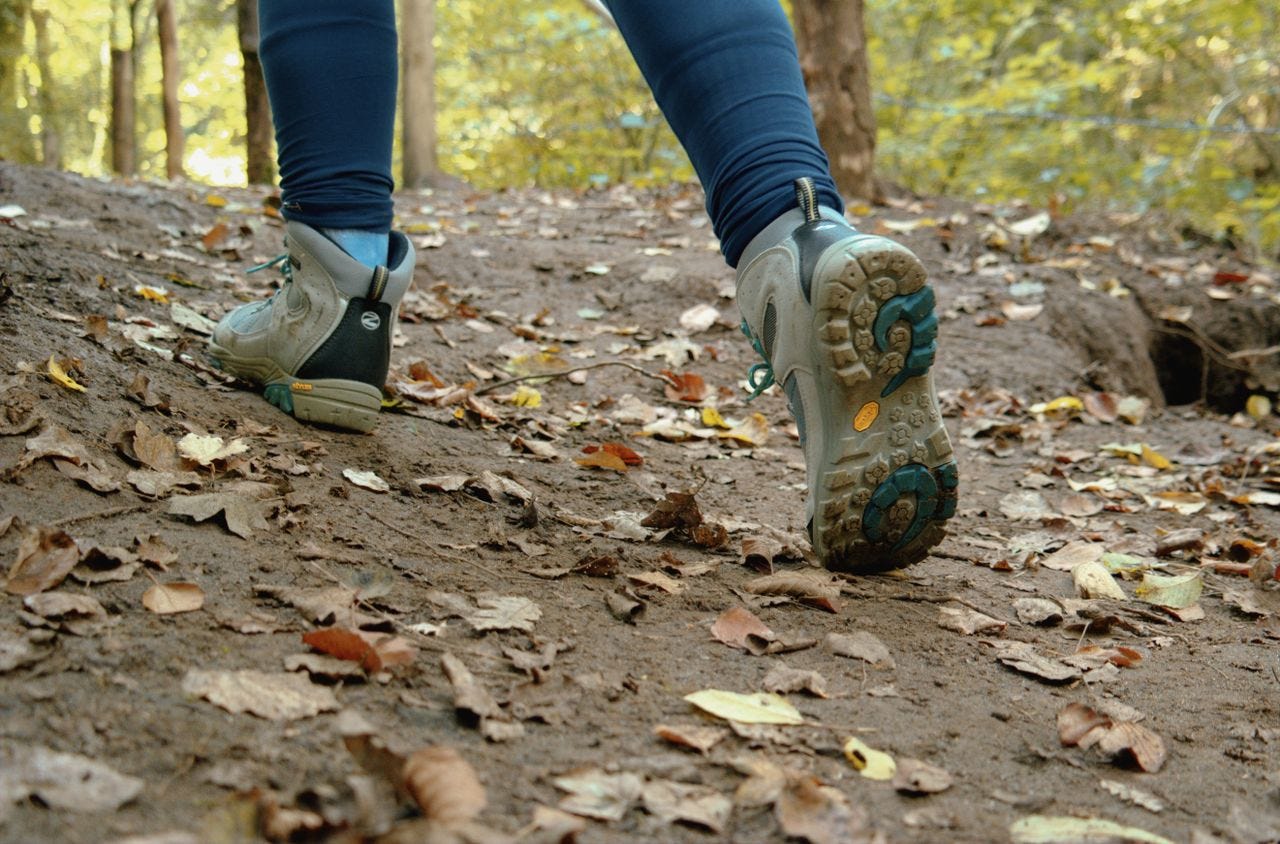
For me, it was a series of injuries in my 60s that made me realise I no longer had the strength to do the hikes I had easily done in my 50s or complete the Peloton rides I saw others my age doing.
For Joan McDonald, one of my favourite Instagram influencers, it was her daughter’s tough-love intervention: she loved her mother, but she was no longer willing to help manage a decline Joan was reinforcing through neglect. It forced Joan to look at the gap between her current state and a truly viable life. There was nowhere to hide from the truth delivered directly by someone who loved her.
But aging rarely shouts; it often whispers.
We all know people who don’t stop the knee from hurting; they just stop walking to the mailbox. They don’t stop their balance from slipping; they just stop visiting friends who have stairs. They feel a twinge in the hip, so they stop walking as far.
They quietly write themselves a permission slip to expect less and less, attributing it all to “just getting old”. Often, without fully realising it, they adapt their lives around the limitation rather than looking directly at what has changed.
When we refuse truthful contact with our aging bodies, we do not stop decline. We surrender more of our choices to it.
Quiet denial is the ultimate architect of a shrinking life.
This pattern isn’t only physical. Deep reading gives way to passive scrolling. Friendships contract because connection takes effort. The project or responsibility that once gave shape to the week disappears, and nothing replaces it. The details differ, but the rule remains the same: we cannot adapt to what we refuse to see.
Often, by the time we are forced to adapt, adaptation has become crisis management rather than a choice we make for ourselves. To avoid relying on a crisis or family intervention to wake us up, we can build our own dashboard and define our own standards for capability, presence, and independence.
If we don’t actively decide what an engaged, dignified week looks like for us, how will we ever notice when we start quietly surrendering pieces of it?
Seeing clearly requires two things: a vision of what might still be possible, perhaps embodied by a role model, and an honest look at where we are standing now. The space between those two points is where adaptation happens.
I remember finding my role models in a community of Peloton riders over 60.
I was astonished at what some of them were doing. It had never occurred to me that I could still ride like that in my 60s. Seeing what those riders could do did not make me feel diminished. It expanded my idea of what riding in my 60s could look like.
These days, social media is awash with aging people taking on adventures in every arena, inviting us to ask: Could I still do something like that?
Over time, my personal measure has become a daily and weekly spreadsheet. I track my HRV (heart rate variability), sleep, Peloton rides, and strength classes. It works for me because data doesn’t blink, and it doesn’t make excuses. I totally get that a rigorous spreadsheet will sound like a nightmare to most people. The joy of the spreadsheet might be unique to me, but we all need some way of recognising what is working and what needs our attention.
A metric can be as simple as the number of steps taken in a day, how many flights of stairs you can climb without becoming breathless, or how easily you can rise from a deep chair or get up from the floor. It might also be how consistently you show up for the activities and people that matter to you.
The spreadsheet is simply my way of noticing.
Someone else might pay attention to time spent in the garden, the enjoyment of a weekly class, the regularity of social time with friends, the books being read, or the question: Am I still doing the things that make me feel like myself?
Our lives will tell us the truth eventually. The question is whether we are noticing it early enough to retain some choice about what happens next.
The purpose of seeing clearly is not to diminish life. It is to remain in relationship with the life that is actually here.
I’d love to hear how this lands for you.
Hit the Like button below, and let’s continue the conversation in the Comments.
I, for one, am sick and tired of metricing myself. It created such levels of anxiety that I stopped being able to sleep, worried about my resting heart rate and sleep interruptions. Every activity I had to report to the little GOD on my wrist and deal with all the reminders to “close my rings”! Jettisoning all that metric stuff at least made me happy
Over my life time I've found it unproductive to compare myself with others, but as I've aged I've found there are some benefits to it. Ha Ha! My visits to friends in the nursing home assure me I'm better off mentally and physically than a lot of people my age. When my new friend at cardio rehab leaned over while we were on the Nustep recumbent bikes and bragged, "I'm going to be 71 this summer, I replied, "That's so great. I'm going to be 80 in August." And I felt a sudden surge in energy. But then I went to a half Ironman this weekend to watch my nephew and 2000 other super-humans. I could hardly get out of bed the next morning after oh & ahing over them for hours. I've observed I'm happily aging somewhere between bedridden and 60 mile bike rides. Enjoyed your article, Robyn. It's good to think about how to stay fully alive as we age.