
What Does Capability Mean in Later Life?
Watching my husband replace decking at seventy-nine makes me reflect on capability, independence, and risk.

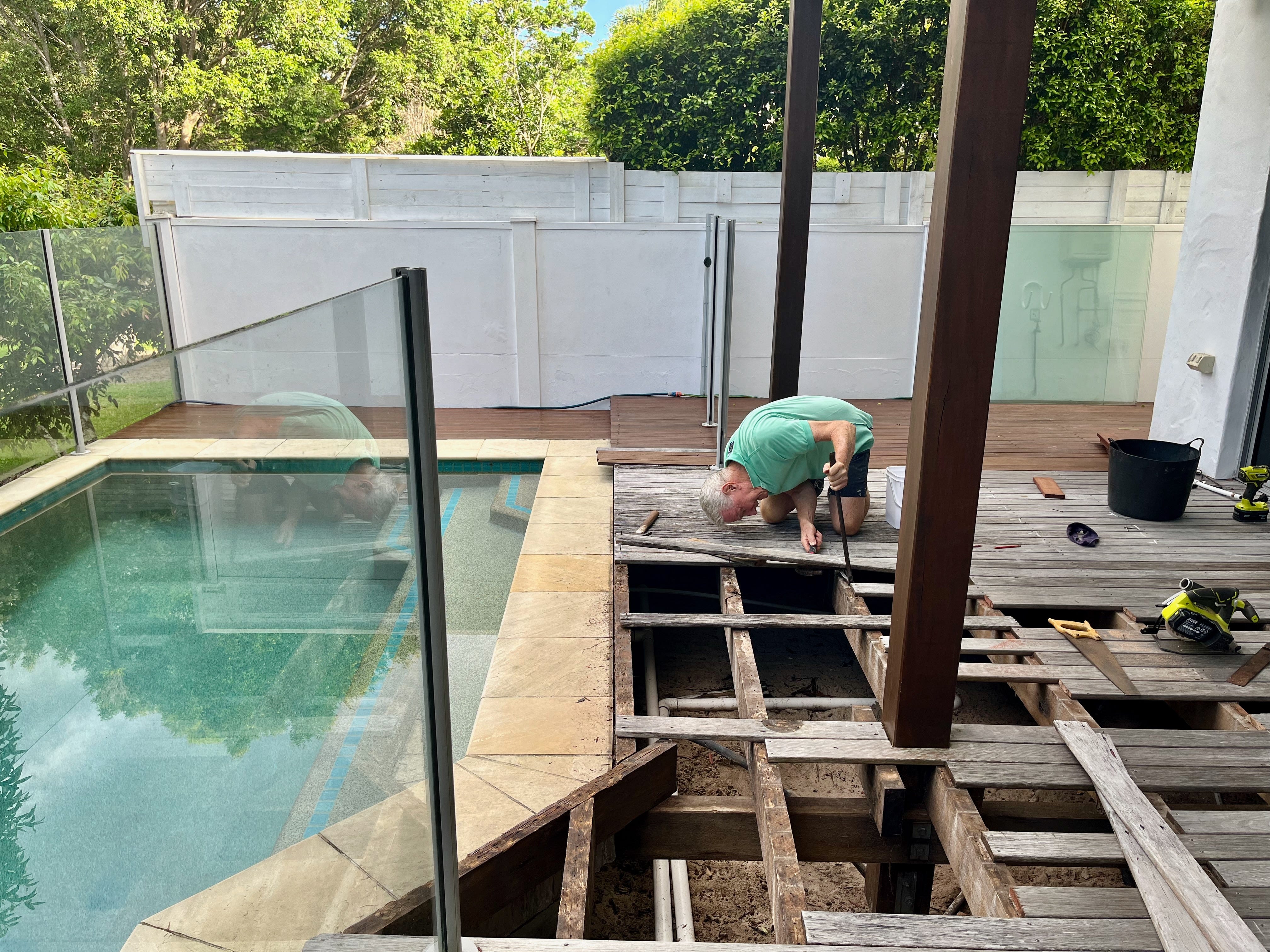
My husband, Frank turns seventy-nine this week.
At the moment, he is outside replacing a large section of decking between the house and the pool. Glass fence panels are removed, boards come up, new boards go down, and screws disappear neatly into the timber. It’s a delicate renovation.
This is not unusual.
Last year, he completed another large section of deck renovation on his own. He thought about how he would approach the job for weeks, then worked carefully until it was done to a standard few tradesmen would match.
In his seventies, he also painted our entire two-storey house — inside and out.
Watching him work has made me think about a word that rarely appears in conversations about aging: capability
In the domain that Frank is working in, capability means:
the physical ability to move confidently
practical skills built over decades
judgement about how to approach a task
confidence that comes from experience
He has all of these. Decades of building, repairing and figuring things out mean that most problems around the house still look solvable to him. I am in awe of his inherent ability to know how things work, even if he has never worked on them before. He is a master problem solver in his domain.
In our discussions about capability, though, we have noticed our capabilities differ across domains, which is great for our partnership. What would happen without each other is another question for the decades ahead. However, we do agree that neither of us has a high level of social capability, so we generally stick to our lanes.
But capability in later life raises a difficult question.
When does capability become risk?
When he was painting a precarious external section of the house, he spent an inordinate amount of time planning and then constructing scaffolding and safety rails. I sent my son a photo of Frank working away on his constructed platform. This son manages large industrial operations and is very serious about safety. He was not happy. But Frank insisted he had thought very carefully, calculated everything correctly and would be fine. He was.
On the other hand, there have been moments when I have insisted he get help.
I insisted that he hire 2 painters to finish the interior work high above our internal staircase. Then I watched them up a very high ladder, one painting and one holding the ladder. I made sure they had insurance and then enjoyed the worry-free moment. Moments like that make me think about capability differently.
Modern society talks a lot about retirement, leisure, financial security, and slowing down.
But the quiet question underneath all of that is capability — what we can still do for ourselves, what skills we still possess, and how confidently we can move through the world.
Thinking about capability this way makes me realise that some capabilities are fundamental to living well, while others simply enrich life.
Walking steadily. Thinking clearly. Managing a household. Maintaining relationships. Finding meaning in daily life.
These are the capabilities that keep a person fully alive in the world. Without them, life quickly becomes smaller and more dependent.
Nice-to-have capabilities enrich life, but their absence does not threaten basic agency.
Frank’s building skills are a perfect example of excellent but non-essential capability.
Capability is what a person is able to do.
But, agency is the will to acquire, maintain and use capability to live a full and rich life.
Some continue to build and maintain capability, often without thinking about it at all.
Others quietly lose core capability over time by handing more and more tasks over to systems, services, or younger people as soon as they can.
Watching Frank work, I see capability made visible.
Strength, skill, judgement, experience — decades quietly compounding into the ability to still shape the world with his hands, the quiet dignity of competence.
For someone demonstrating capability, the real question in later life becomes not whether we are capable.
But whether we have the wisdom to know where capability ends, and unnecessary risk begins.
Capability gives us independence.
But wisdom lies in knowing when to ask for help.
My favourite posts this week:
Contribution without productivity by Denise Taylor
Living Arrangements by Susie Kaufman
Medicalization: The Patient is the Product by Jorg Mardian RHN, CPT
He really is a keeper, even if he does scares us with his contraptions sometimes.
An excellent post thanks. From the opposite side, none of those skills are in my genes nor my arsenal.
He's a keeper!