

Welcome to Age with Attitude, where I have upgraded that one question to:
What’s possible as we age?
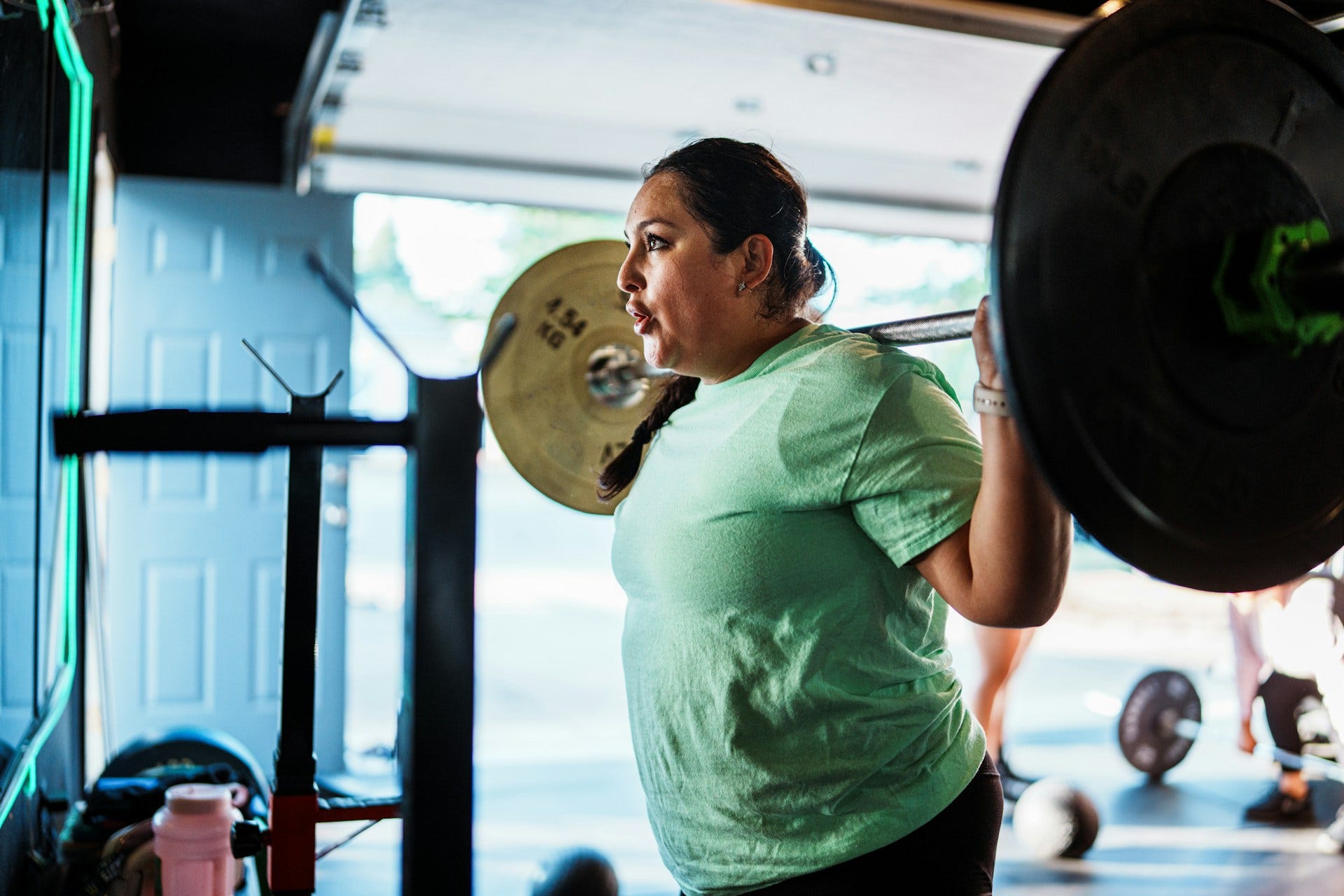
Every week, I walk through the door of my Onero weights class and watch a fascinating spectrum of humanity play out. We are a room full of older adults (mostly women) who have ‘checked the box’ to show up to build bone density after an Osteoporosis diagnosis, but the emotional frequencies inside the room couldn’t be more different.
First there is Lyn. Lyn clearly doesn’t actually want to be there—yet she still turns up every single week. She moves through the exercises indifferently, relying on the trainer to set up her equipment and guide her movements. I call her posture ‘apathetically active’. She is physically in the room, but her mind is still waiting in the commentary booth.
Then, there is Pat. As we sat stretching together after a recent session, I asked her how long she’d been coming. ‘Eighteen months,’ she told me. Pat had struggled with bone density problems for years. She’d been medicated for a decade until she was told she had to come off the drugs. She also told me she absolutely hated the idea of exercise. Even on the day she walked into her very first session, she despised the thought of being inside a gym.
But she stayed.
She tolerated the friction of being a beginner, pushed through the internal resistance, and eighteen months later, her bone density numbers are excellent.
She is flourishing.
At the high-velocity end of the room is Rosemary. An ex-high school teacher and an ‘Eveready’ bunny. She is a slip of a woman, and plays pickleball for two straight hours before she even turns up for her weights session. When she deadlifts, I am certain she is lifting her own body weight, which can’t be more than 50 kilograms.
Then there is Sue, the real heavy lifter of our group, moving steel with a quiet, undeniable authority.
I stand there watching Sue and Rosemary, and I sometimes wonder whether I’ll ever be able to lift those kinds of weights. But I know the secret isn’t genetic luck. The secret is consistency, and I have proved to myself I can do consistency. Progressive overload and the voluntary discomfort that naturally goes with it are the keys to success here. More than anything, it’s that ‘I feel so damn good’ feeling carrying me through the rest of the day that I am after.
Looking at the women in that room made me reflect on a comment left on my Substack this week by an incredibly resilient 82-year-old reader. She detailed her daily battles with chronic fatigue, autoimmune pain, and a bad back, but noted she still lives independently, writes on Substack, learns ChatGPT, and walks her dog three times a day. What I was most impressed by was the beautiful sentence in the comment:
‘But I do ask myself what I can do’
That sentence is a masterclass in personal integrity. On days when your body is dealing with limitations, severe pain, or a low-energy baseline, asking ‘What can I do right now?’ is an absolute triumph of human spirit. It is the vital protective shield that rejects total apathy and keeps you moving forward instead of giving up. It is what gets Lyn through the gym door and keeps my 82-year-old reader sovereign in her own home. ‘What can I do?’ is the essential foundation. It holds the line.
But once you have established the foundation, a second question quietly awaits. It’s the question Pat eventually asked herself through the fog of hating the gym.
What could I do if I started small and stayed consistent?
Where ‘Can’ deals with the reality of your body today, ‘Could’ is an invitation to the potential of your tomorrow. ‘Could’ doesn’t demand that you conquer a mountain this afternoon; it simply introduces the concept of gradual expansion. It asks you to tolerate a tiny bit of voluntary discomfort—whether that means adding a single kilogram to a lift, walking one block farther, or wrestling with a challenging piece of technology—to see where your boundaries can stretch.
We need both questions to stay fully alive. We use ‘What can I do?’ to meet our current reality with dignity and action. And then, the moment we find our footing, we layer it with ‘What could I do?’ to actively challenge the shrink.
This week, take a look at your own safe routines. Honor what you can do today - and then dare to ask yourself what you could do tomorrow.
Let’s find out what’s possible together.
A quick note: I’ve changed the names of the wonderful women in this piece to honor their privacy while sharing their stories.
I’d love to hear how this lands for you.
Hit the Like button below, and let’s continue the conversation in the Comments.
My Favorite Reads this Week:
Is It Safe to Ask a Chatbot About Your Symptoms? A Senior’s Honest Guide by TheSeniorTechie
The Senior Techie continues to deliver clear, effortless ways for Seniors to use AI safely. Great read to share and open conversations with an older family member.
When Do We Become Old? by Denise Taylor
An uplifting read that will shift your conventional limits on growing older, reframing later life as a dynamic chapter full of purpose, vitality, and fresh opportunities in the years ahead.
Please don’t wait 40 years like I did. by Monica Hebert
Monica delivers a beautiful, heartfelt wake-up call to step into your authentic truth today. An inspiring push to stop putting off your happiness and start fully living, loving, and expressing yourself without delay.
I love this! I've been training with an online personal trainer for two years and have been amazed at what I can do that I couldn't do before. I just use dumbbells at home and wish I had the nerve to walk into a gym. It's such a foreign place to me. I love hearing what other women are doing to stay strong.
Thanks for the mention!